Showing posts with label Anne Sibley O'Brien. Show all posts

Sunday, May 24, 2015

Stars in My Eyes

Last week I received the great news that my upcoming picture book, I'm New Here, received a starred review in Kirkus!
"O’Brien’s watercolor-and-digital illustrations masterfully use perspective, white space, and the contrast between the children 'back home' and in their new settings to highlight the transition from outsider to friend. ...
Whether readers are new themselves or meeting those who are new, there are lessons to be learned here about perseverance, bravery, and inclusion, and O’Brien’s lessons are heartfelt and poetically rendered."

My editor, Julie Bliven, commented in an email that, "I feel as though the reviewer was sitting at our table two years ago at Simmons and listening in on you, me, and Whitney [art director]. They really understood what you were trying to achieve."

It's thrilling to have a beloved project recognized in this public way. And it's rare - and deeply affirming - to be gotten, to have the book described exactly as we envisioned it.

This mention increases the likelihood that the people who are looking for books about immigrant children will find it, and best of all, that it will get into the hands of children who will find themselves reflected in my book.

Thanks, Kirkus!

Tuesday, May 12, 2015

The Picture Book Project

You are invited to the launch of 

The Picture Book Project

A Bates College Collection Portraying People of Color

May 21st 
4-6pm
Bates College Ladd Library
Light refreshments will be served

Come celebrate with other parents, teachers, librarians, authors, illustrators, publishers and researchers who share an interest in diverse children's books. Hear about the collection, peruse the books and learn how you can check them out for personal or professional use.


Founded by Krista Aronson, Associate Professor of Psychology at Bates, in collaboration with Anne Sibley O'Brien, children's book creator, the Collection is comprised of fiction and narrative non-fiction picture books (grades K-3) depicting characters of color published in the United States between 2002-2013. Using the collection, Professor Aronson, her collaborators and students contribute to the national dialogue about diverse children's books, capturing and communicating their dominant themes and exploring their impact on inclusion and bias, including how teachers and parents utilize them in everyday life. In line with its community focus, these books are available to everyone at Bates and beyond for research, education and personal use. 

Sunday, May 18, 2014

Librarians Make the Most of a School Visit

As we leave Children's Book Week, here's an appreciation of children's librarians, the world over.

One of my March school visits was particularly memorable because of extraordinary efforts of librarians to engage their students in my work before I arrived.

Brent Subic Library staff (left to right): Riza Bamba (elementary library assistant), Angelo Fernandez (middle school librarian), me, Debbie Kienzle (Brent International School head librarian), Rose Austria (lower school librarian).

At Brent International School Subic in the Philippines, Rose and Angelo put my books on display, put up welcoming banners, and read my work to their students.


Riza, who'd never been part of an author visit before, worked with the 4th and 5th graders to create the most amazing display of creative projects in response to my work that I've ever seen. She first went online to research what kinds of projects other schools had produced. She googled "author visits," looked at Pinterest, and gathered examples to give students ideas of what was possible.

The students, in small teams of 3-5 students, used 2 library periods per week for more than a month, plus free time - a total of 10-15 hours on each project. They did online research about me and my books, then used their imaginations to craft incredibly original and delightful projects demonstrating their knowledge, including...

a Lift-the-Flap poster ;


a Facebook page;

   
a gameboard;


a hanging poster;


  a house;


and a pizza box!


The result of this extraordinary investment of time, energy and creativity was palpable in the students' response to meeting me. When the 4th-5th graders came into the auditorium for their workshop, they were bursting with excitement. It felt as if there was already a deep bond between us, as if I was theirs. What an honor and a delight to spend time with them!

Saturday, May 17, 2014

The Philippines!

Catching up on my spring: back in March, my second Southeast Asia stop was the Philippines, where I visited the three campuses of Brent International School. It was fascinating to experience the differences between the schools, from Subic's 200 students (80% Korean) in a building on a former U.S. military base, to Baguio's hillside cluster of buildings with 300 students (60% Korean), to Manila's student body of more-than-1000 diverse students from all over the world.

And I got to travel and experience wonders of the Philippines, from Subic Bay on the western coast...

with breakfast by the bay,


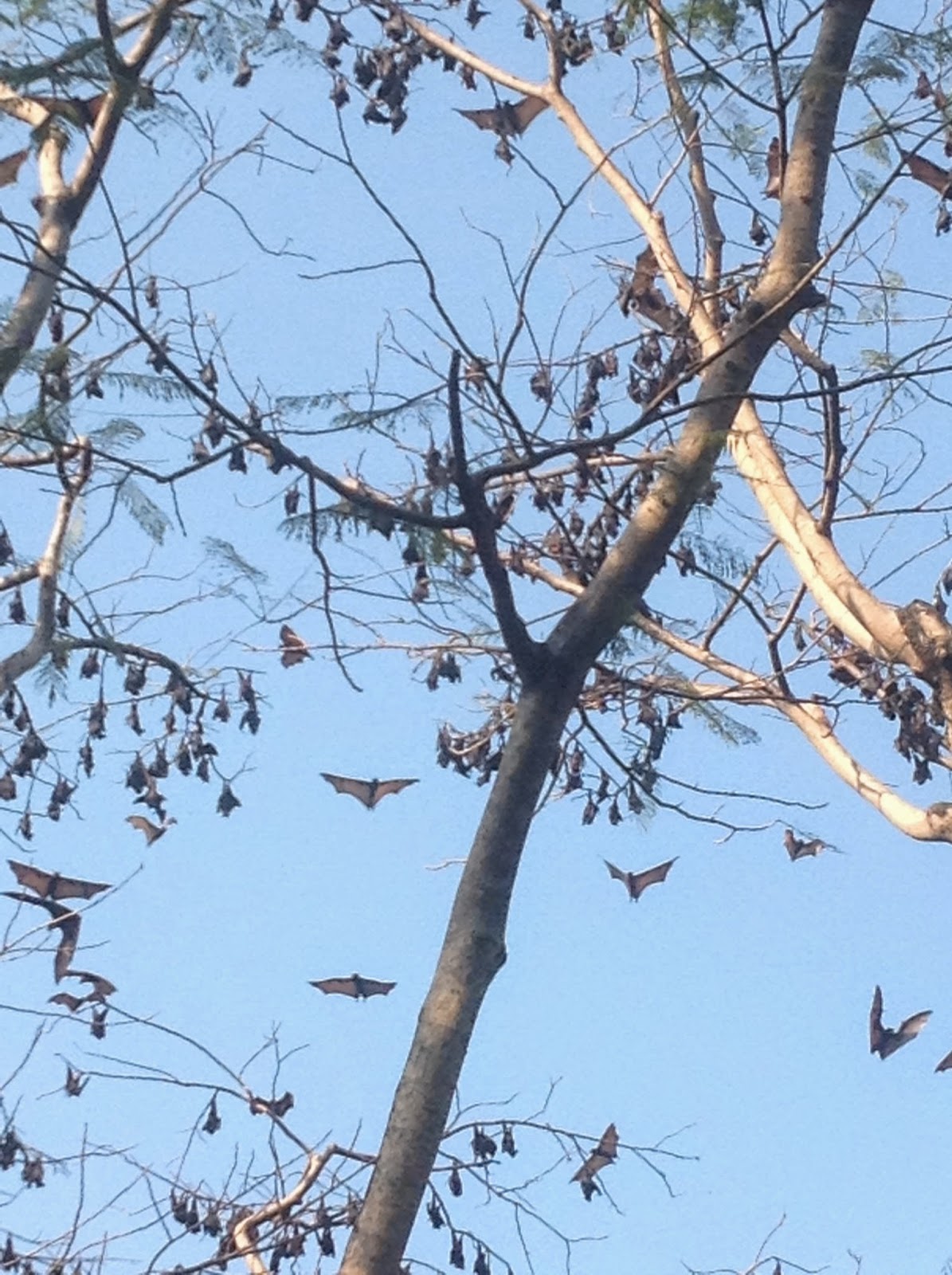
and fruit bats in one protected area;
then across the central plain and up twisting roads to mountain-top Baguio,

where I was the first-ever international author to visit,


and students were very excited by autographing.

Baguio had some of the most amazing jeepneys I saw.

Then back down the mountain and across the plain, driving through Manila and to the southern suburbs...

Another  hotel breakfast with a very different view!

  to the main campus of Brent Manila.


Throughout, I was accompanied by librarian extraordinaire Debbie Kienzle, and welcomed so warmly and graciously by her library staff, the schools' personnel and students, and the Filipinos I met everywhere we traveled.


Thursday, May 15, 2014

Cross-Group Books

In, "How Cross-Racial Scenes in Picture Books Build Acceptance," the piece Krista Aronson and I co-authored for the online version of School Library Journal's Diversity issue, we presented an overview of research demonstrating that children's books depicting positive cross-racial interactions could reduce prejudicial attitudes.

Here is the list of books we identified that portray friendship and fun between characters of different races. (The first racial group listed is that of the point-of-view and/or interaction-initiating character.)

Bein' Friends by Karen Beaumont, illustrated by Joy Allen (White/Black)


Bein’ With You This Way by W. Nikola-Lisa, illustrated by Michael Bryant  (Black/Multiracial)


Chicken Sunday by Patricia Polacco (White/Black)


Come On, Rain by Karen Hesse, illustrated by Jon J. Muth -  (Black/Asian/White)


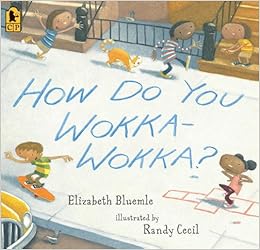
How Do You Wokka-Wokka? by Elizabeth Blumele, illustrated by Randy Cecil (Black/Multiracial)


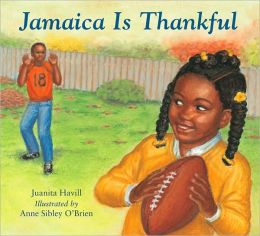
Jamaica is Thankful by Juanita Havill, illustrated by Anne Sibley O’Brien (Black/White) 
[All seven Jamaica titles portray cross-race relationships, but this title best fulfills the cross-group criteria.]


Lottie Paris and the Best Place by Angela Johnson, illustrated by Scott M. Fischer (Black/White)


My Friend Jamal by Anna McQuinn, illustrated by Ben Frey (White non-Muslim/Somali Muslim); see also My Friend Mei Jing.


Yo! Yes? by Chris Raschka (Black/White)


The ideal cross-group book emphasizes the fun diverse children are having together, the activities they do together and the things they have in common. Any other titles to suggest?


Tuesday, January 14, 2014

Announcing the NEW Talking Walls

Talking Walls - Discover Your World, written by Margy Burns Knight and illustrated by me, is coming in February. It's the "Classic Edition" of the two original Talking Walls titles, updated and rewritten for read-aloud effectiveness and compiled into one volume. The book introduces young readers to 26 walls in 22 countries, including every continent except Antarctica.


We're celebrating with a launch party on February 7, 2014:

3:45 - 4:45 TEACHER WORKSHOP
Maine Charitable Mechanic Association Library
519 Congress St, 2nd floor
Portland, Maine

The first forty educators who register are invited to an hour-long free workshop with the author and illustrator to introduce the new Talking Walls - Discover Your World, and to share examples of how to use the book to meet Common Core standards for informational text, grades K-8: Key Ideas and Details, Craft and Structure, Integration of Knowledge and Ideas, and Range of Reading and Level of Text Complexity.

Each participant will be entered in a drawing to win a free copy of the book at the launch party (see below).

To register: Email name, school and contact information (subject line: Teacher Workshop) to margyburnsknight@gmail.com by February 1, 2014

5:00 - 8:00 LAUNCH PARTY (during First Friday Artwalk)
Mainely Frames
541 Congress Street, Portland, Maine

- Refreshments: Wine & cheese & crackers
- Display of original Talking Walls illustrations
- Books available for purchase and autographing
- "Reconciliation and Forgiveness Wall" - Community activity honoring the life of Nelson Mandela
- Drawing for free copies of the book (for educators who attended the workshop) - 5 winners


Wednesday, July 17, 2013

The INNERview

During my June trip to Korea, I was invited to be the subject of “The INNERview” on Arirang TV. The hour-long program, #71, aired the week of July 8.  It can be viewed on YouTube here.

Arirang TV (livestream here) broadcasts 24/7 news, culture and all things Korean, in English, for overseas Koreans and the English language community in South Korea. The INNERview includes a wide range of interesting subjects - Koreans, Korean Americans, and a few foreigners like me who've made deep connections with Korea.

Here are a few behind-the-scenes pictures of the taping:


Kim Cha Ryung - or "Paige" - my liaison with Arirang TV, with my friend Yoo Myung Ja, who made the connection for me.


Host Susan Lee MacDonald, makeup artist, cameraman and producer reacting to my book,
The Legend of Hong Kil Dong.


The shoot, in a traditional house at Nam-San-Gol Han-ok folk village in downtown Seoul


Umbrellas over the cameras during a rain shower.


The entire experience was an honor and a delight and I'm very pleased with the program that Arirang produced.

Tuesday, February 12, 2013

Celebrating

Lovely to get the news that my latest book, A Path of Stars, received recognition as:
- The Honor Picture Book of the Asian Pacific American Award for Literature 2013;

- and a Notable Social Studies Trade Book for Young People 2013, a cooperative project of the National Council for the Social Studies (NCSS) and the Children’s Book Council (CBC).


Sunday, September 20, 2009

Anne Sibley O’Brien interviews Juanita Havill

Juanita Havill has been writing for children since 1982. Her first book Jamaica’s Find, illustrated by Anne Sibley O’Brien, has won many honors including the Ezra Jack Keats New Writer Award in 1986. Since then Havill has written and O’Brien illustrated six more books about Jamaica, all published by Houghton Mifflin. Havill has written many other picture books, a collection of poems I Heard It from Alice Zucchini (Chronicle Books 2006), middle grade novels, and a novel in verse Grow (Peachtree Books 2008). Havill also teaches writing classes and leads writing workshops.

ASOB: The Jamaica books are often cited for their ethical content and used in character or core values educational units. How did you come to write the first Jamaica story and were you thinking of it as a story about a child's ethical dilemma?

JH: Actually the first Jamaica story idea I had was for the second published story: Jamaica Tag-Along. I had sketched out a plot with a young African-American girl as my main character, but the story wasn’t coming together. Then when I had an argument with my daughter about a stuffed animal she found and wanted to keep, I outlined a story which included this common dilemma of childhood, and since I already had a character in mind, I asked, “What would Jamaica do?” I didn’t set out to write about ethical dilemmas, but the fact is children often face choices, difficult choices, although adults don’t always realize how large such situations loom for children. I tried to depict a child facing an everyday challenge.


ASOB: How did the character of Jamaica first come to you?


JH: Like all of the characters in my picture books and novels, Jamaica is a composite. I had observed a couple of girls at a park in Minneapolis where I lived at the time, one African American and one white. I saw them often, always together. Jamaica is also inspired by a college friend with whom I lived in a language-learning house on campus. Like my friend, Jamaica is intelligent, friendly, active, and resourceful with a normal capacity for anger, moodiness, and hurt feelings. Although she is not overly assertive, Jamaica is not timid about pushing the limits. She is, in some way, every child, but she happens to appear in the body and with the mind of a six-year-old African-American girl.


ASOB: When you wrote Jamaica’s Find, did you ever suspect that you would go on to write six more Jamaica books?


JH: I did have that scribbled draft, and once I got the story right, I figured that I would have a second Jamaica book. But seven books about Jamaica? No, I never envisioned a series although students have always offered lots of suggestions during my school visits. “Why don’t you have Jamaica go on a trip?” “What would happen to Jamaica if she really messed up?” Educators, too, have made suggestions: “Have you considered writing a Jamaica story with bullying as a theme?”


ASOB: Do you often encounter readers who are surprised to discover that you're white? What do you think accounts for the warmth of the reception of the Jamaica books by African-American reviewers and readers?


JH: Young readers up to eight or so seldom express surprise that I am not African American. They don’t ask me why I, a white woman, chose to write about Jamaica as a character nor do they wonder if the illustrator is black. On the other hand, educators, especially white teachers, have often said when they meet me, “We thought that you were black.” That was many years ago. With the arrival of the internet anyone can easily view my photo and make judgements from the photograph. I don’t think that people/students aren’t curious but that they are too polite to ask, “Why did you choose a main character who is black?” Perhaps Attorney General Eric Holder is right about the inability of black Americans and white Americans to speak openly and frankly about race. I think, though, if he had been paying attention to the children’s book community, he would have been aware of lively, informed discussions about race and encountered strong opinions expressed without timidity. I am aware of many discussions about cultural authenticity, about who can write about whom, and I follow these conversations with interest.


I am grateful for kind words and a warm reception from the African-American audience. I don’t know if this has happened to you, Annie, but I suspect you would have the same happy feeling I did when a twenty-five-year old African-American woman meets you at a talk, pulls out her dog-eared copy of Jamaica’s Find, and asks you to autograph one of her favorite childhood books. Or a five-year-old white girl with her blond hair done up in multiple braids asks you to sign her book and tells you her name is “Jamaica” and explains, “Like the girl in the book.”


ASOB: What's your experience having stories that you've written interpreted by someone else in pictures? How do the final books resemble what's in your mind as you write, and how are they different?


JH: Remember the film Amadeus and that funny little laugh Tom Hulce did as Mozart that expressed such spontaneous joy? That’s how I feel when I see words become images with color and movement and expressive characters. Often the images do remind me of those in my mind when I was writing. For instance, the Jamaica in my mind resembles the one you have created. Sometimes the characters or setting surprise me. When I wrote Leroy and the Clock, I visualized a portly, bald grandfather and the illustrator Janet Wentworth, portrayed him as a slim, bearded man with a full head of hair. This surprised me, but after reading the story hundreds of times at school visits, my original vision fades.


ASOB: The editor of the early Jamaica books told me that when you wrote Jamaica and Brianna, you saw Jamaica's best friend, Brianna, as African American. What was your response when you saw (or heard about) the sketches in which Brianna was Asian American?


JH: At a book-signing in Minneapolis I autographed a book to an African-American girl who told me her name was Brianna. I took note of the name and visualized this girl when I introduced Brianna in Jamaica and Brianna. When my editor showed me your sketches, we talked about your Asian-American Brianna, and I thought she was compelling. As Asian American, Brianna added another cultural presence to the story. Then when I learned that your daughter was the model, I thought “Terrific.” That must have spared you searching the island for a model. You may not know that when I wrote Jamaica and the Substitute Teacher, I thought of Russell as African American. I have always believed in allowing the illustrator room to imagine and unless it is crucial to the story, I don’t make a list of “to dos” for the illustrator. The cultural dynamics may be different, but I think that your depiction of Russell acting out in response to his family’s imminent move is spot on.


ASOB: Three years ago, Houghton Mifflin released the twentieth-anniversary edition of Jamaica’s Find. All six titles are still in print, and a seventh book is coming out in the fall. This is almost unheard of in children's picture books. What are some of the factors you think have contributed to the longevity of the series?


JH: That the Jamaica stories remain in print and continue to be read, and I hope, pondered and enjoyed, amazes me, especially since the shelf life of books has shortened considerably in the past twenty years. I think that the accessibility of the stories has helped keep them viable — the everyday situations and choices that reflect a reality that children and their parents recognize and identify with. The multicultural aspect of the books reflects contemporary life in the US and many other countries of diverse cultures and populations. The language is straightforward (“pedestrian” a critic once wrote over twenty years ago) and the traditional plot does not make demands on the young reader. The illustrations are compelling, too, picture-perfect depiction of emotions that deepen the reader/listener’s identification with the characters. I would have to commend the design including page breaks and pacing that make the stories so natural to read aloud to groups.


ASOB: Are there any other Jamaica stories in your head or in your files?


JH: Oh yes, there are always Jamaica stories in my head, and snippets in my files. I even dream about Jamaica. The challenge is finding the right situation for Jamaica, the true-to-life problem or dilemma which will challenge her. Then I can ask, “What will Jamaica do?” and let her show me her response.

Juanita Havill Interviews Anne Sibley O’Brien

JH: When did you become aware that the main character of Jamaica’s Find is African American?


ASOB: The letter I received from editor Matilda Welter asking if I'd like to illustrate the book specified that the main character was African American. Art director Susan Sherman had chosen me as the illustrator because my portfolio featured lots of children of color, and she thought the manuscript was a good fit for my style.


JH: How do you decide what scenes to illustrate?


ASOB: I first read the text over several times, then make tiny rough thumbnail sketches of the images that come to my mind. With all the Jamaica books, these were usually just figures, because the characters and the emotional journey always come first for me. The thumbnails are my first notes, trying to visually jot down what I perceive as the spine of the story, who's in the scene and what they're doing. Later on, as I develop the storyboard and dummies, I fill out the scene by refining my first impressions, varying the distance (close-up, middle or far away), and sketching in the setting.


JH: How do you manage to keep characters consistent and recognizable throughout the book, in fact, throughout the series? There is one exception: Ossie from Jamaica Tag-Along has changed from the Ossie of Jamaica’s Find. Why?


ASOB: I used photographs of real children (and adults) as models for the characters. The model for Jamaica was a little girl named Brandy, whom I met through a friend who was a reading teacher in NH. I called Brandy's mother to ask if she'd be willing to meet and allow me to photograph her daughter. (Her mom still sends me a Christmas card every year, and Brandy, age thirty and the mother of two, recently found me online and we have an email correspondence.) Jamaica's mother and father are based on the few photos I took of Brandy's mom and dad. The difference in Ossie's appearance (which no reader or reviewer has ever commented on!) comes from the fact that I made up the character of Ossie in the first book. He only appeared once, so I didn't need a model. Then, three years later, here came an entire new manuscript, all about Jamaica ... and Ossie! I had to go on a search to find a boy who looked like someone I'd made up.


Each time there's a new book, I take out the old photos of Brandy to use as references for Jamaica's face. For her body, I find another little six- or seven-year-old girl for a body model. For the third book, it was my daughter Yunhee, who modeled for Jamaica's friend Brianna and also did Jamaica's body poses.


JH: Your images of characters are evocative portraits. How do you visualize and then portray emotion so effectively?


ASOB: I've been tuned in to people's feelings since I was a tiny child, so observing the expression of emotion comes very naturally for me. I've also had extensive training in acting, as a college theatre minor and over years of community and professional theatre and acting classes and workshops, so I've thought a lot about what emotion looks like. Sometimes I use myself as a laboratory, feeling how the emotion would affect my body, then looking at the pose in the mirror.

One of the best sources for ideas is the models themselves. I tell my child models what's happening in the scene and ask them how they would feel and what they would do if that happened to them. They often respond with wonderfully natural and original gestures and expressions.


JH: When you illustrated Jamaica's Find, did you ever suspect that you would be called upon to illustrate six more Jamaica books?


ASOB: It was the furthest thing from my mind. I thought it was a sweet, quiet story that probably wouldn't make much of a splash, but I was thrilled to have the opportunity to illustrate my first picture book. I never could have imagined that it would grow to seven titles and all would still be in print twenty-three years after the first was published.


JH: What is your philosophy of the role of illustrator of children's books?


ASOB: The role of the illustrator is to serve the story. It's wonderful to make a beautiful picture, but if it doesn't expand and enhance the text, it's not good illustration. My role is to create images that don't repeat what's already in the text but bring the story to life in multiple dimensions. I try to add bits that enrich and thicken the plot, that suggest more to the story without changing it.


JH: Can you demonstrate what is meant by "visual literacy" from your work?


ASOB: Ever since I heard author-illustrator Molly Bang talk about how pictures work at a conference I attended in the early 1990s, I've been reflecting on her ideas about how artists use picture composition to enhance meaning. Consciously or unconsciously, the illustrator creates a path for the viewer's eye to follow, and uses shapes, color, texture, line and other visual elements in ways that affect the viewer's response to the picture. Once you become aware of this potential, you can use these things in an intentional way to evoke certain effects. It's literacy when you or the viewer can read these visual symbols and effects.


JH: How do your approaches differ in illustrating your own text and a text by another?


ASOB: When I'm illustrating my own text, there's a lot more fluidity between text and images, because there's no point at which there has to be a firm determination of what will be expressed in words, what will be in pictures. When it's someone else's manuscript, the words are already set, so I'm responding to something that's already decided. It's a narrower sphere to work within, but freeing in its own way because in a sense my job is simpler.


The 7th Jamaica!!


Jamaica Is Thankful is being released this fall by Houghton Mifflin Harcourt.

This is the seventh title that author Juanita Havill and I have created about the young girl named Jamaica. The first was Jamaica's Find, published in 1986, and released three years ago in a twentieth anniversary edition.

Over the twenty-six years that these books have been created, Juanita and I have only met twice. In February of this year, we had a chance to do a week of school visits together for the first time, in Phoenix, Arizona, where we both happened to be presenting at the International Reading Association.

We also took the opportunity to interview each other and find out the answers to questions we'd had over the years about each other's experiences and process in creating these books.