Monday, August 29, 2011

Thanks

Wow, amazing to see that, as of this morning, this quiet little corner of the blogging world has gotten 10,000 hits . If I remember my stats correctly, more than half of them have come this year, the last quarter of the 2 1/2 years I've been posting.

I never set out to keep one of those personal up-to-the-minute blogs with daily I-can't-wait-to-see-what-she's-saying now posts. (I'm in an alternate universe: I don't have a Facebook account, I don't use Twitter, I don't even use a cell phone.)

Instead, my intention has been to build an archive of thoughtful entries - and comments - that people could discover at any point and return to as needed over time when the topics addressed were useful to them. I also hope to expand the experience with illustrations that model the principles I'm exploring.
It's very gratifying to know that those discoveries and returns happened 10,000 times. So if you're reading this, welcome, and thanks for stopping by.

As always, I'm delighted to hear other people's ideas, and ideas for related topics to address.

Sunday, August 28, 2011

Jamaica Turns 25!!


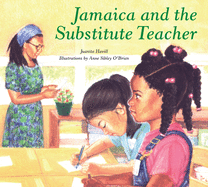
Twenty-five years ago, the first picture book about a young girl named Jamaica was published by Houghton Mifflin (original cover above, 20th anniversary edition below).


Written by author Juanita Havill and illustrated by me, Jamaica's Find has been published in Spanish, in England and New Zealand, in book-tape and book-cd editions, and as an e-book, and reprinted in school book clubs and curriculum programs. It was recommended on Reading Rainbow, and read by former first lady Barbara Bush on her radio program. (As a result, Juanita and I were invited to the White House for tea, with everyone else connected to the radio show. We met there and have been in touch ever since.) This week Publisher's Weekly included Jamaica in an article on book anniversaries.

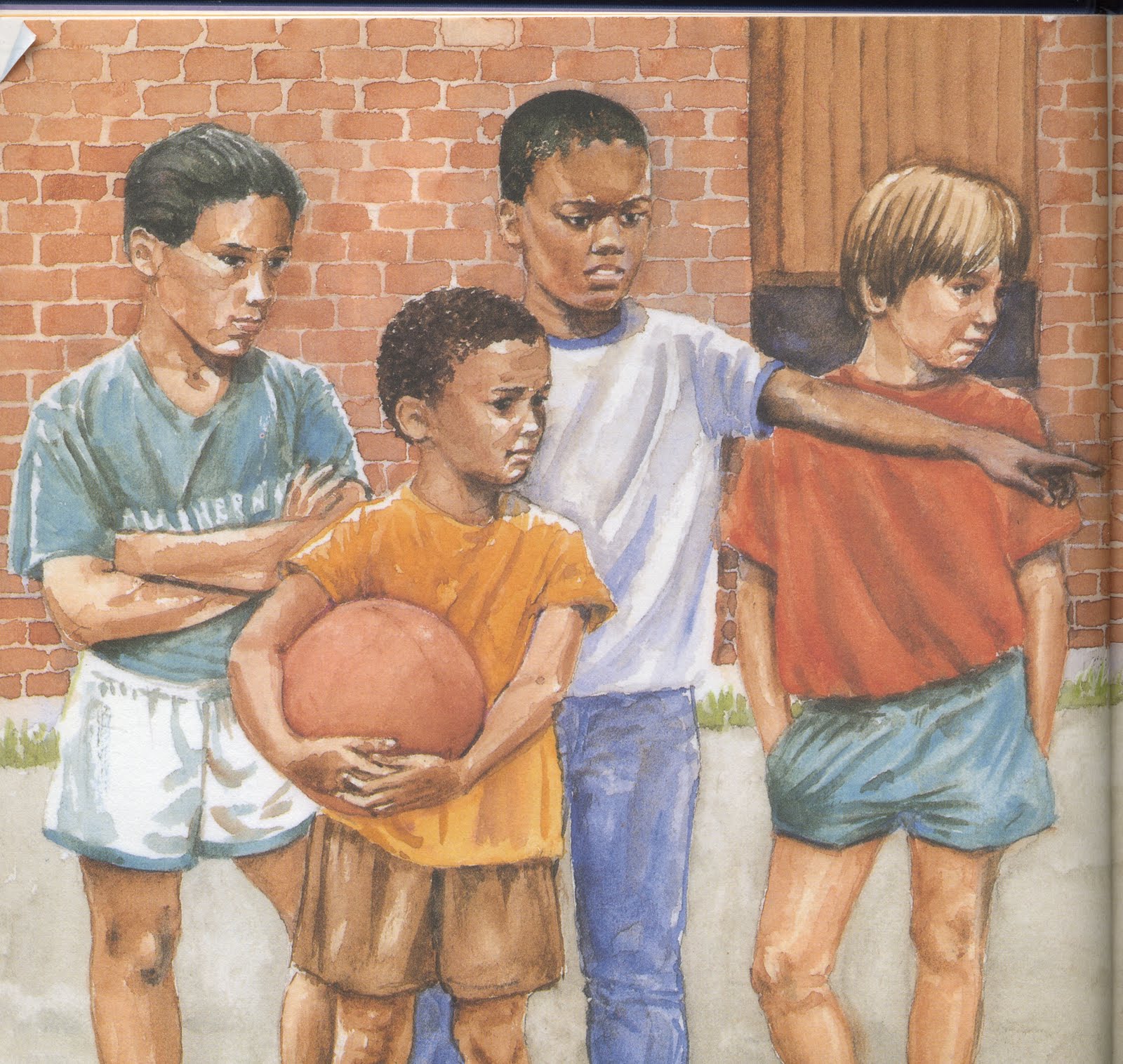
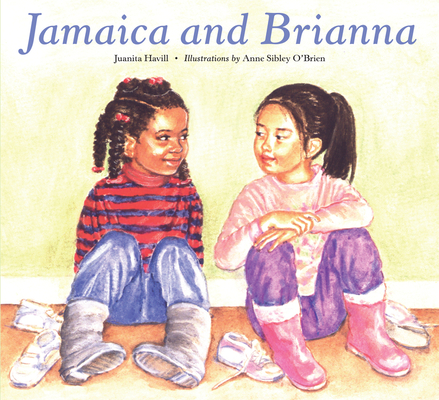
Best of all, the first Jamaica is still in print, and has been joined by six other titles about the same character:


Here's my announcement of #7.

The Jamaica books feature a young protagonist who happens to be African-American, so they are always on lists of "multicultural" books, but there's actually no cultural content in them. Jamaica is Everychild, facing small, everyday ethical dilemmas common to young children. She goes to school, she makes friends (one white, one Asian), she interacts with her loving, intact family, she figures out how to do what's right. That's precisely the significance of the series, and perhaps a clue to its longevity.

Juanita and I interviewed each other here and here.

HAPPY BIRTHDAY, JAMAICA!

Friday, August 26, 2011

How to Talk About Race: Expert #1


On October 18, I'll be presenting two sessions at the Friends School of Portland, Maine: "Mirrors & Lenses: Racial Identity Formation in the Classroom," an afternoon workshop for educators, and, with Bates psychology professor Krista Aronson, an evening community event, "Books as Bridges: Children's Literature and Anti-Racism Education."

In preparation for the event, I'm reading a stack of books on these topics, seeking out the latest research and theory. I began with one of our best thinkers on the topic of race, Beverly Daniel Tatum, author of "Why Are All the Black Kids Sitting Together in the Cafeteria?" and Other Conversations About Race.

Her newest book, Can We Talk About Race? And Other Conversations in an Era of School Resegregation, isn't as much about how to talk about race as I'd anticipated from the title (a large section addresses the implications of school resegregation), but there are valuable teachings on what needs to be included in conversations about race, especially in schools.

I found the most useful information in the "ABC Approach to Creating Inclusive Learning Environments." Tatum argues that children need environments that "acknowledge the continuing significance of race and racial identity in ways that can empower and motivate students to transcend the legacy of racism in our society even when the composition of their classrooms continues to reflect it."

The ABCs are Affirming identity, by allowing children to see themselves reflected in the environment around them; Building community, in which everyone has a sense of belonging; and Cultivating leadership, preparing citizens for active participation in a democracy.

I was particularly interested in Tatum's thoughts about educating white children, who she says need schools that are "intentional about helping them understand social justice issues like prejudice, discrimination and racism, empowering them to think critically about the stereotypes to which they are exposed in the culture."


Tatum notes the essential work of white parents and teachers in understanding Whiteness: "When White adults have not thought about their own racial identity, it is difficult for them to respond to the identity development needs of either White children or children of color." "The good news," she goes on to say, "is that those who have engaged in a process of examining their own racial and ethnic identity, and who already feel affirmed in it, are more likely to be respectful of the self-definition that others claim, and are much more effective working in multiracial settings."

Her message is clear: the ability to navigate race is an essential skill for all students of all races in the 21st century.

The book has extensive footnotes from many sources - more resources to explore.

Thursday, August 25, 2011

A Week of Comics

At the beginning of August, I got to spend an entire week in the Cartooning Studio, an intensive workshop for adults at the Center for Cartoon Studies in White River Junction, Vermont. What fun!

My goal was to further develop the graphic novel that my daughter Yunhee and I have been creating, a fictionalization of her middle school experience - being teased, loving to read and draw manga (Japanese comics), and learning to stand firm in her identity, including being Korean and adopted. It's called Manga Girl.

Here's one of the images I went in with:
and here's what I came out with, after the inspired teaching of the young, phenomenally talented staff (biggest change was switching from marker to brush line):I also completed the outline of the story and 13 spreads of thumbnails (small sketched layouts of double pages). Now it's in my daughter's hands for scripting.

Some of the interns posted an account of the entire workshop on the CCS Schulz Library blog, from Day 1, through Day 5 (my project is mentioned - and that's me in the turquoise shirt).

Thursday, August 18, 2011

Africa is Not a Country, Redux

Last January, author Margy Burns Knight and I spent a week-long residency at Fiske Elementary School in Lexington, MA, where we led 400+ students in the creation of a book about their daily life, entitled Our Corner of the World. With the help of the faculty, staff, and parents (especially Cynthia Wimer and Songyi Kim!), each class participated in writing the text, I illustrated their stories in full color, and each student contributed a b&w spot drawing. The book was printed and every student received a personal copy.

Our Corner of the World was a response to our own book, Africa is Not a Country, written by Mark Melnicove and Margy and illustrated by me, about the daily lives of children in 25 of Africa's countries (then 53, now 54, since the Republic of South Sudan became a nation on July 9, 2011).


Market in Benin, illustration from Africa is Not a Country

Since the completion of the Fiske book, the two books have been sent, through people who had personal connections with schools, to students in seven African countries: Uganda, Ethiopia, the Gambia, Tanzania, Benin, Kenya, and Zambia. Here's the book being delivered to the head of a school in the rural community of Simikanka, Zambia:

Lest anyone think the book and the information is no longer needed, here's a teabag my brother found last month and passed on to me:


For a closeup:


(This from a tea company in the nation that colonized a number of Africa's countries!)

For more on the book and the topic, see the inaugural post of this blog, as well as this one about how the book was created, and this one about programs Margy and I do in schools.